Mental fitness
Help Him Handle the Pressure

The pressure's real. So is the support.
Three techniques to help a young man in your life focus their energy and back themselves when the pressure is on.
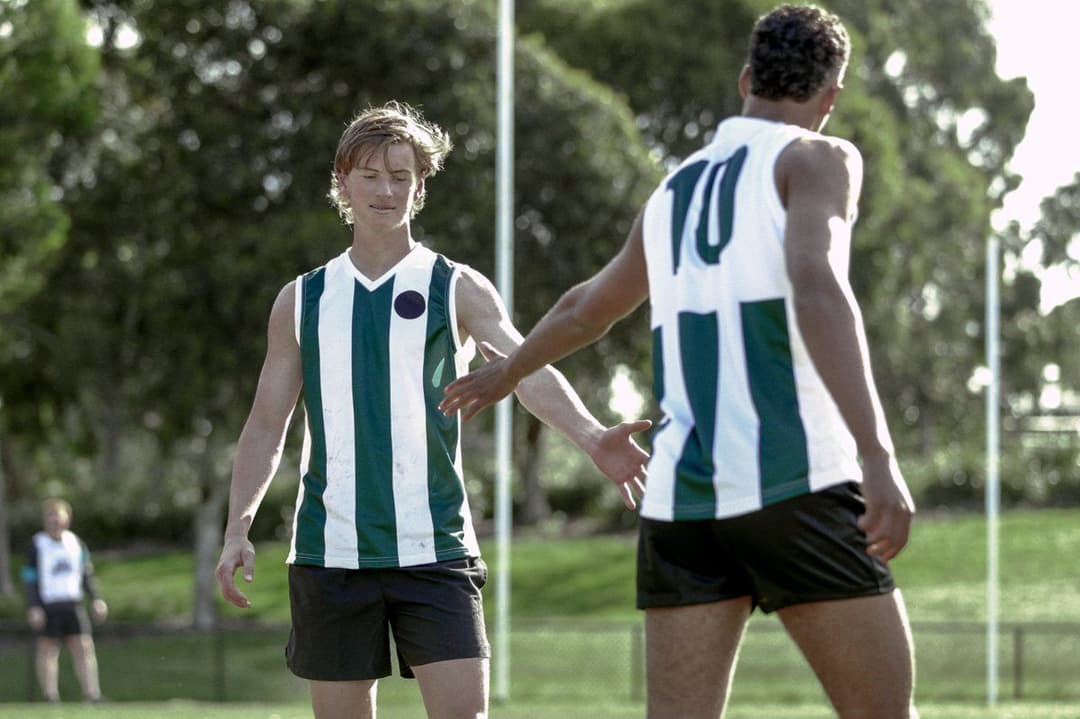
Saturday afternoon. Game on the line. The ball drops to a young man forty metres out. The crowd is loud. The voice in his head is louder: don’t miss, don’t miss, don’t miss.
The best goal-kickers understand something most of us learn the hard way: you will miss sometimes. Everyone does. What sets the good ones apart isn’t that they never drop one. It’s that they don’t let it get to them. They’ve stopped playing the scoreboard in their head and started running their routine instead.
It works the same way off the field. When a young person you care about is stuck in the what-ifs before something big, whether that’s a big game, an exam, a first day on the job, you can’t make the nerves disappear. But you can help them focus on what they can control, get the voice in their head back on their side, and remind them that handling pressure is something you get better at.
Control the controllables
The first move is getting their attention back on what they can actually influence. Sit down with them and split the problem into two piles: what’s in their control, and what’s not. It takes a load off straight away, because half the weight of any big moment is usually stuff that was never theirs to carry.
Back to the goal square. A player can’t control the wind, the umpire, or the man in Row F with the loud opinions. What they can control is the routine: the same steps back, the same breath, the same spot on the ball. The routine pulls their attention off the outcome (“what if I miss?”) and onto the process (“just run the normal run-up”). That shift is what actually helps people hold up under pressure.
That’s the move for any tough moment, on the field or off it. Process over outcome. Control the controllables, let go of the rest.
Get the voice in their head back onside
Everyone has a voice in their head. Under pressure, it gets louder, and meaner. The way we talk to ourselves in those moments has a real effect on how we perform and how we feel.
Ask them: would you talk to a teammate that way? You’d never pile on a mate after a mistake. You’d say bad luck, shake it off, you’ll get the next one. Help them aim that same energy inward. “Adjust for the conditions, move on, I’ll nail the next one.” It’s not about not learning the lesson. It’s about being your own coach instead of your own heckler.
Strengths work the same way. When things go pear-shaped, the brain loves to reel off a list of everything you’re bad at. Flip it. Help them name what they’re actually good at: “I’m a calm head. I always find my way back into the game.” That’s something solid to stand on. And if they can’t see their own strengths when they’re in the thick of it, name a couple for them. You’ll often spot them before they do.

Sometimes the hardest game is the one in your head.
Build the growth mindset
Men who handle pressure best aren’t born that way. They’ve learnt how. They’ve had bad days, stuffed things up, and kept coming back. That’s the mindset you’re trying to build in a young person: not ‘I’m no good under pressure’, but ‘I’m getting better at handling it.’
That shift, from fixed to growth is one of the foundations of resilience. It doesn’t happen overnight. But every time a young person gets back up after a tough moment, they’re building it.
Cast your mind back
Think back to the last time a big stressor had its hooks in you, like a job interview, a speech, or a conversation you kept putting off. Remember how the worst-case version played on a loop, and how little of what you were dreading was ever actually in your hands? That’s exactly where a young person sits before dealing with something that matters to them.
Game plan
Next time you spot a young man tying himself in knots before a big moment, don’t try to talk him out of the nerves. Work with them instead.
Help him separate what he can’t control from what he can. Some young men like it on paper — two columns, side by side. Others would rather talk it through on the drive home. Either way works.
Then ask him one question: what’s something you’re really good at that could help here?
You might find it settles something for you, too.
Struggling, or worried about someone else? Find support resources here.